
CSR Documentation in Nigeria: Why It Is the Missing Link in Sustainable Impact
CSR documentation in Nigeria remains one of the most overlooked elements of corporate social responsibility. While many organisations implement community projects, far fewer properly document their activities, outcomes, and measurable impact.
Without documentation, there is no evidence.
Without evidence, there is no credibility.
In an era where stakeholders demand transparency and ESG compliance is increasingly scrutinized, CSR initiatives must move beyond visibility and into verifiable accountability.
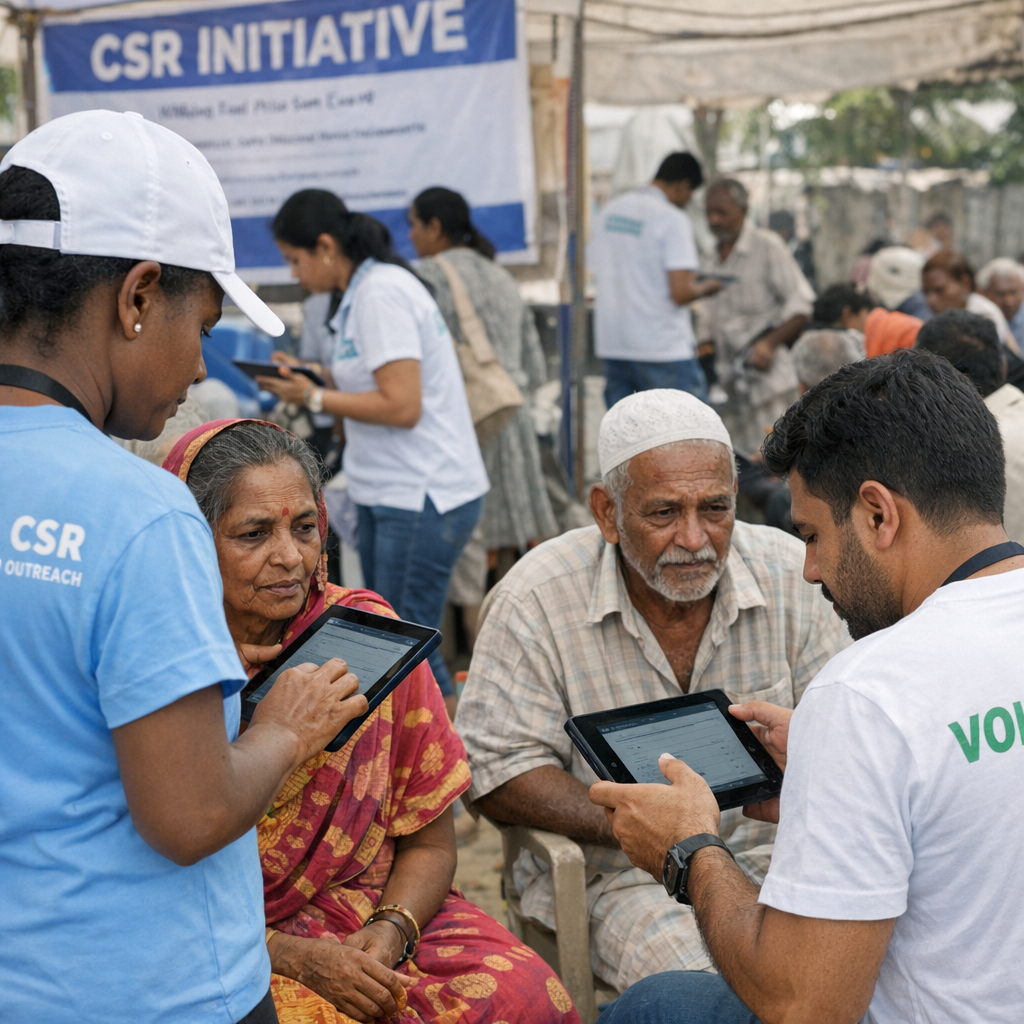
No Proof, No Credibility
Across Nigeria, numerous CSR programmes are launched with good intentions — food distributions, skill acquisition programmes, medical outreach, and community interventions.
However, many fail to answer critical questions:
- How many beneficiaries were reached?
- What measurable change occurred?
- Were outcomes tracked beyond participation?
- Is there documented evidence of impact?
Photographs alone do not constitute documentation.
Proper CSR documentation in Nigeria requires structured data collection, verification, and reporting.
What Proper CSR Documentation Involves
Effective CSR documentation goes beyond capturing event highlights. It includes:
1. Recording Beneficiaries
Documenting names, demographics, and verified participation where appropriate.
2. Capturing Quantifiable Data
Tracking resources distributed, funds allocated, and services delivered.
3. Measuring Outcomes
Assessing whether the intervention produced measurable change — improved skills, income opportunities, health outcomes, or educational progress.
4. Verifying Results
Using internal audits, third-party validation, or structured monitoring frameworks.
Proper documentation transforms CSR from a public relations exercise into a strategic impact initiative.
Why CSR Documentation Matters for Nigerian Organisations
In Nigeria’s evolving corporate and nonprofit environment, organisations are increasingly evaluated based on measurable impact rather than activity volume.
Investors, partners, and regulators now expect:
- Transparent reporting
- Clear ESG alignment
- Evidence-backed impact metrics
- Structured evaluation processes
Organisations that neglect CSR documentation risk:
- Reduced stakeholder trust
- Weak ESG positioning
- Difficulty attracting continued funding
- Limited long-term credibility
In contrast, organisations that prioritize CSR documentation in Nigeria build stronger reputations and attract sustained partnerships.
Documentation as a Strategic Asset
CSR documentation is not bureaucracy — it is strategic infrastructure.
It enables:
- Clear annual reporting
- Investor confidence
- Regulatory compliance
- Donor transparency
- Long-term impact measurement
For NGOs and CSR-driven companies, documentation separates claims from credibility.
It converts community engagement into measurable institutional value.
Strengthening CSR Documentation Through Structured Systems
At GHSEI, we advocate for structured CSR implementation supported by transparent documentation processes.
Impact is not only about what is done — it is about what can be demonstrated.
Organisations seeking sustainable community development must prioritize systems that track, measure, and verify results consistently.
Explore our CSR impact initiatives to learn how structured documentation strengthens long-term community outcomes.
👉 View Our CSR Impact Projects
Frequently Asked Questions
Why is CSR documentation important in Nigeria?
CSR documentation in Nigeria ensures transparency, measurable impact, and stronger ESG alignment for organisations operating in competitive and regulated environments.
What should CSR documentation include?
It should include beneficiary data, financial allocation tracking, outcome measurement, and verification mechanisms.